Furnace and Heat Pump Repair in Sachse
Gas furnaces and heat pumps that blow cold, short-cycle or will not start, and the safety steps to take first.
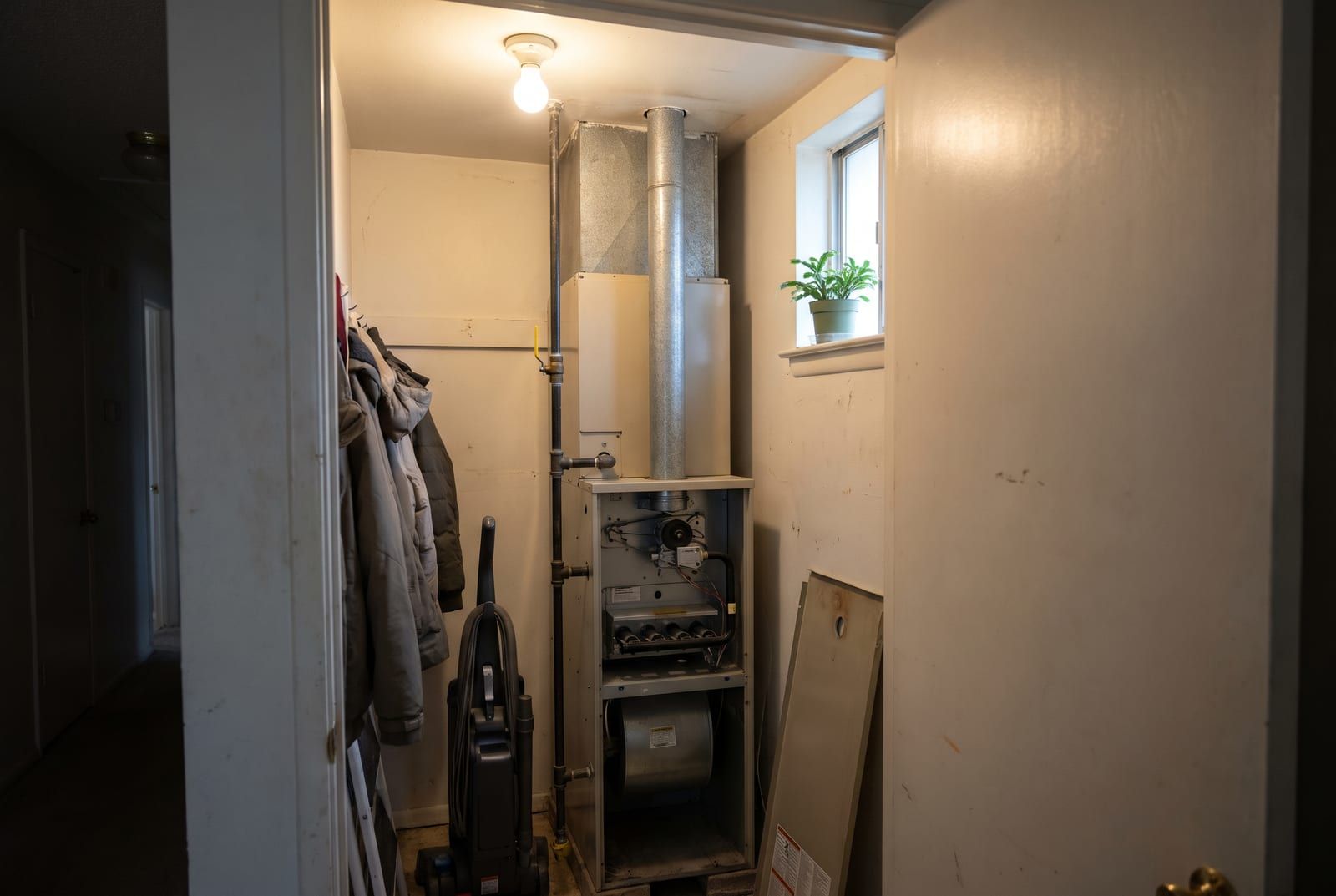
Most houses around Sachse heat in one of two ways. A gas furnace burns natural gas and blows the warmth through the ducts, usually from a closet, the garage or the attic. A heat pump is the outdoor unit of the cooling system run in reverse, with electric heat strips in the air handler to back it up on the coldest nights. Some homes have both, a dual fuel system that lets the heat pump work in mild weather and the furnace take over in a freeze. We repair all three, on any make or model.
Our winters are short, but they come in sudden freezes. A system that has sat idle since spring gets switched on and asked to run hard the same night, which is when a dirty flame sensor, a failed igniter or a tired set of heat strips makes itself known.
Safety First: Gas, Carbon Monoxide or Burning Smells
- You smell gas: do not switch lights or appliances on or off, and do not use a phone inside. Leave the house, then call the gas company’s emergency line or 911 from outside.
- The carbon monoxide alarm sounds: get everyone, pets included, out into fresh air and call 911. Leave the furnace off until it has been checked.
- A burning or electrical smell that does not fade: switch the system off at the thermostat and the breaker, and call us at (469) 398-8711.
Signs Your Heating Needs Attention
- Cold or lukewarm air from the vents with the heat on
- The burners light, then shut off after a few seconds
- The furnace clicks, hums or tries to start several times
- The heat pump’s outdoor unit stays covered in ice
- Rust, scale or soot around the burners or the flue
- The system runs in short bursts all night
- A smell that lingers after the first few minutes of heat
What a Heating Repair Visit Includes
HVAC- Thermostat and Call for HeatMode, set point and wiring, and whether the call reaches the furnace or heat pump.
- Burners and IgnitionIgniter, flame sensor, gas valve and the flame itself on a gas furnace.
- Venting and Safety SwitchesFlue pipe, draft inducer, pressure, limit and rollout switches.
- Heat Pump and Backup HeatReversing valve, defrost cycle, outdoor fan and the electric heat strips.
- AirflowFilter, blower and the temperature rise from the return to the supply side.
Common Heating Faults and What We Check
| Symptom | Common causes | What the technician checks |
|---|---|---|
| The furnace runs, but the air is cold | A dirty flame sensor shutting the burners off, an ignition fault, a closed gas valve | Flame sensor, igniter, gas valve and pressure, the furnace’s fault code |
| The burners light, then shut off within seconds | A dirty flame sensor, a weak ground, a blocked flue or a tripped limit switch | Flame signal, venting, limit and rollout switches |
| The furnace will not start at all | Thermostat or wiring, a tripped switch, a blown fuse, a failed draft inducer or control board | Power, thermostat call, pressure switch, inducer motor and the board |
| A heat pump blows lukewarm air on a cold morning | Normal defrost, a stuck reversing valve, low refrigerant, backup heat not coming on | Defrost cycle, reversing valve, charge, the backup heat strips and their breakers |
| A heat pump’s outdoor unit is caked in ice | A defrost control or sensor fault, low charge, a fan that has stopped | Defrost board and sensor, outdoor fan, refrigerant charge |
| Short cycling or uneven heat between rooms | A clogged filter, an overheating heat exchanger, leaking or closed ducts | Filter, temperature rise across the furnace, duct runs and registers |
| A burning or electrical smell that does not fade | Dust on the heat exchanger on first use, or an overheating motor or wire | Blower motor and capacitor, wiring, the heat strips |
Before You Call
- The thermostat is set to Heat, above the room temperature, with fresh batteries if it takes them.
- The breaker for the furnace or air handler is on, and so is the light-switch style service switch beside the furnace.
- The furnace door is closed tight: many furnaces will not run with the door off.
- The filter is not clogged; a blocked filter can make a furnace overheat and shut itself off.
- On a gas furnace, the gas valve handle runs in line with the pipe.
Furnace and Heat Pump Work
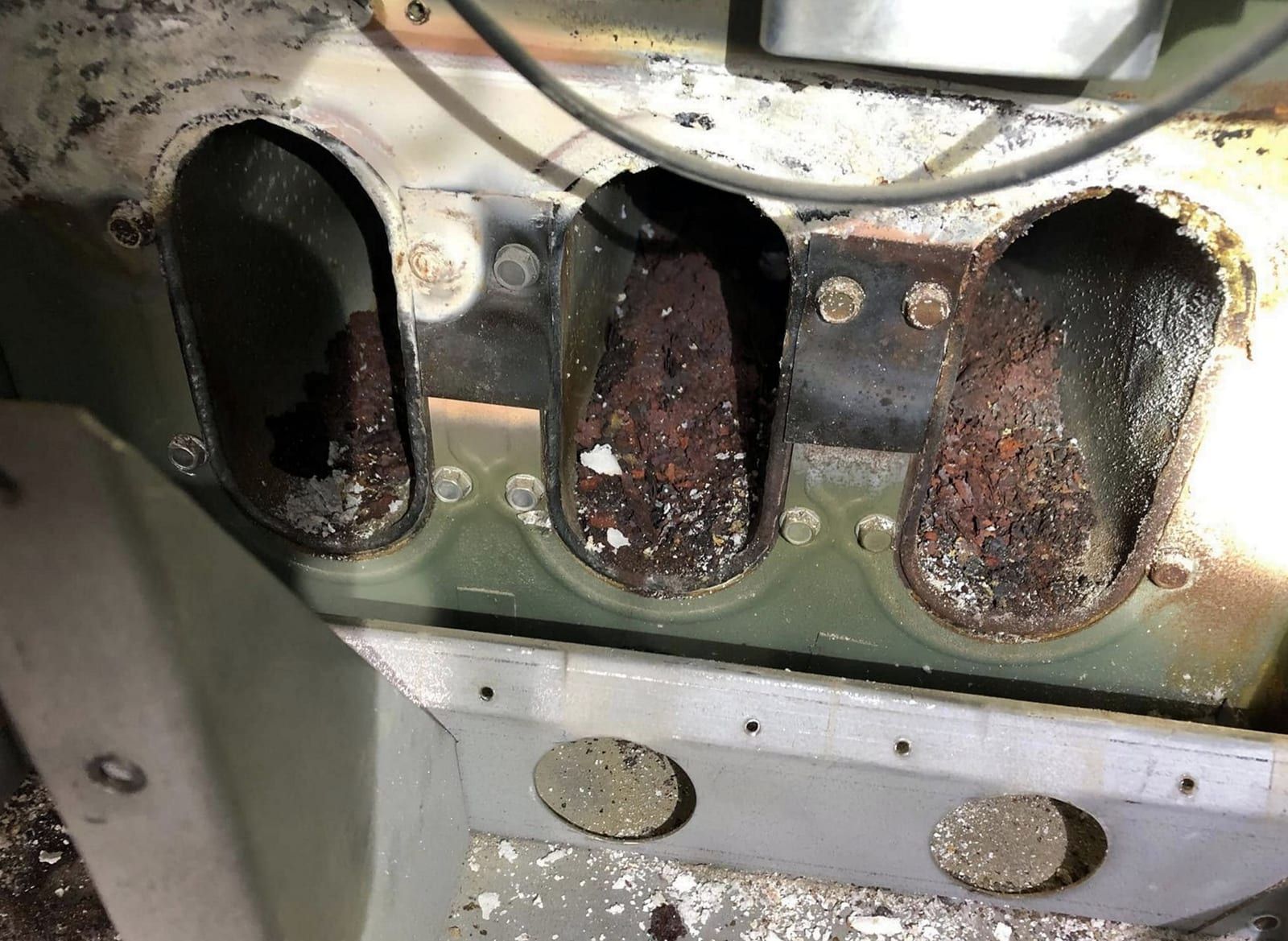
Most heating repairs are a single part: a flame sensor that needs cleaning, an igniter, a pressure switch, a blower capacitor or a heat strip. Older furnaces sometimes show rust and scale around the burners, as in the photo above, which tells us to look harder at the heat exchanger and the venting. A heat pump that heats poorly may need nothing more than a defrost sensor, or it may be low on refrigerant from a leak.
Furnaces and Heat Pumps in a Cold Snap
Why does my heat pump struggle during a cold snap?
A heat pump draws its heat from the outdoor air, and below about freezing it has less to work with, so the backup heat strips carry more of the load. If the strips or their breakers have failed, the house cools down on exactly the nights you need heat. A cold snap also shows up weak defrost controls, which leave the outdoor coil iced over.
Is steam from the heat pump’s outdoor unit in winter a problem?
Usually not. A few times an hour in cold, damp weather the heat pump runs in reverse to melt frost off its coil, and the melt can steam. A unit that stays covered in solid ice, or that never seems to finish a defrost, needs a look.
The furnace has not run since spring. Is the burning smell on the first cold day normal?
A dusty smell for the first few minutes is common, as dust burns off the heat exchanger. A smell that stays, smells of hot plastic or wiring, or comes with smoke is not, and the furnace should be switched off until it is checked.
Can a cracked heat exchanger be repaired?
A crack in the heat exchanger is a safety problem, because it can let combustion gases into the airstream. Most manufacturers treat it as a replacement part rather than a repair, and on an older furnace the cost often points toward replacing the furnace. We show you what we found before anything is decided.
What should I do if the heat goes out on a freezing night?
Check the thermostat mode and batteries, the breaker for the furnace or air handler, and the filter. If the system still will not run, keep doors to unused rooms closed, open the cabinets under sinks on outside walls, and call us to set up a visit.